
Conversational Design: The Ultimate Guide for Chatbot Conversation Flow

The personality defines how it communicates with the customers. So, how can you ensure your chatbot doesn’t force your users to opt for a live chat instead of your conversational AI? These simple cues suggest that you need a change in your conversation design. Retention rate is probably one of the easiest ways to understand how your conversational AI is doing.
- The Machine Learning and AI algorithms help the chatbot to study the past user interactions and behavioral pattern.
- The thing is that when we’re involved in human-to-human interaction, we exchange information and show our interest to a person.
- If you apply conversation design practices but are unsure whether your chatbot provides a human-like experience, test it.
- Standard patterns and flows don’t really work in conversational design, or else they need significant readjustment.
- The design process should include defining the purpose of the chatbot, and other design considerations to create a successful user experience.
In everyday conversation between people, the participants are also doing things through talking—explaining a point of view, clarifying another person’s logic, or maybe making plans. Without considering what the user is trying to do, we won’t ever actually be able to complete transactions at scale for them. The past few years have seen an increase in conversations taking place on Facebook Messenger, WeChat, and Whatsapp. However, these conversations often feel impersonal and sometimes, even deceptive. The reason could be that in many cases, they rely too much on application logic and too little on effective design.
Conversational Chatbot Design: 10 Steps to Designing a Conversational Chatbot
With no-code chatbot builders, you can build conversation flows easily once you have gained some insight. Keep certain tips in mind while designing the conversation flow. Rule-based chatbots, on the other hand, converse based on predefined decision trees. Conversations are mapped out, like a flowchart, to anticipate what a customer might ask and how the chatbot should respond. Bots equipped with Natural Language Processing (NLP) can comprehend the context of even the most complex questions.
No matter how smart or advanced your chatbot is, there will always be some queries that it may not be able to answer or is outside its scope. In such cases, you need to think about how to serve your customers best. A chatbot design should include different redirection options. This could be handing over to a human agent or redirecting to a complaint form where the customer can explain their concern in detail.
Is it challenging to utilize Conversational AI in conversation design?
Our detailed Bot Building Checklist is here to guide you in getting the most out of your Cognigy.AI chatbot before you release it to the public. According to PSFK, 74% of customers today would rather use a chatbot to solve simple issues. But some companies are still concerned that automating their customer support will damage the customer experience.
Chatbot UX design is the process of creating a seamless user experience when interacting with a chatbot. It involves designing the conversation flow, crafting the right messages, and ensuring that the conversation feels natural and intuitive for users. Therefore, it’s important while designing a chatbot, that its conversational flow avoids rude messages and promotes a positive user experience. The chatbot’s messages should be clear, concise, and respectful, even when responding to difficult or complex queries. By doing so, businesses can build a positive reputation, increase customer loyalty, and foster long-term relationships with their customers.
Grouping Conversational Flows
The main goals of Chatbot UX design are to provide an interactive, practical, and personalized experience for users while helping them fulfill their tasks in the most efficient way possible. They let firms communicate with clients swiftly, efficiently, and cheaply. Interaction chatbots may be connected to CRM software, websites, and messaging apps. This allows organizations to customize consumer experiences across numerous channels, improving customer pleasure and loyalty.

Although conversational messaging is a dialogue, giving someone a choice of two or three options can be the quickest way to move along to the next step without confusion. To that end, we looked above at Conversation Design best practices for basic diagram layout, the grouping of flows, and labeling flows and blocks for ease of reference. In the next part of this series, we’ll build out some flows for an example bot using the best practices described above and in part 1. Furthermore, each user-facing or significant block in the diagram should then be given a sub-ID based on the flow it belongs to.
The other is a chatbot request that waits for user input
and responds to it. If a chatbot sends too many messages that ignore
user input, it feels like a monologue instead of a
dialog, or conversation. If a chatbot asks too many questions, it feels like an
interrogation instead of a discussion. So, just like all good things, a little moderation and balance is required.
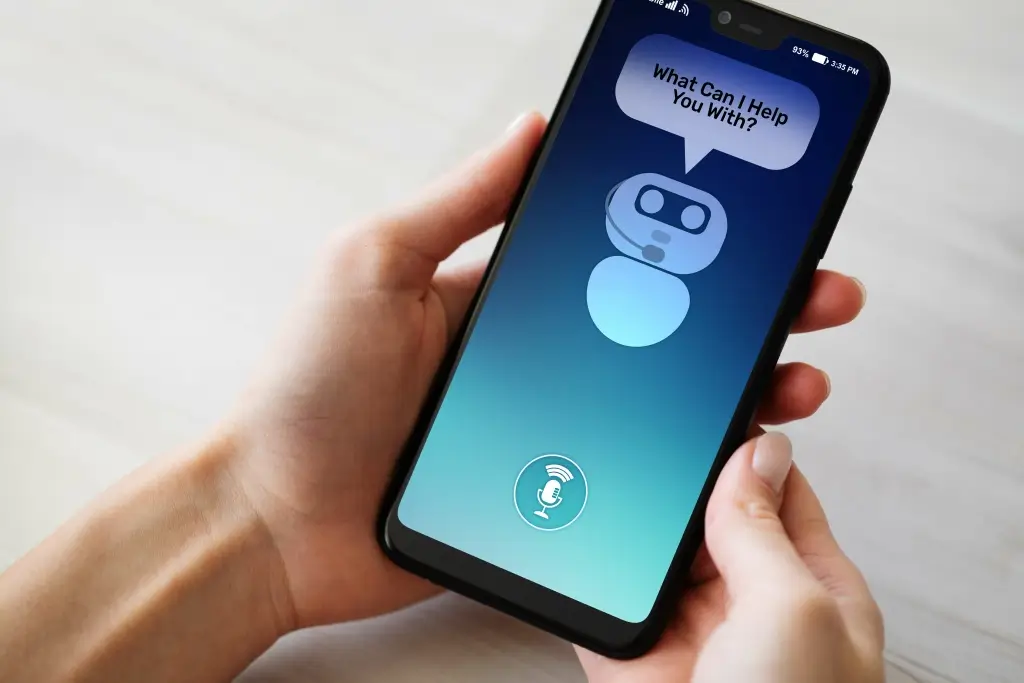
We’ll look for opportunities to optimize and streamline our bot before releasing it, and address any loose ends in our flows where the bot might need extra training. With chatbots, the words that appear in on-screen speech bubbles make up almost the entire experience. The dialog between the bot and the user determines the different paths they can take, so the words become the primary mode of interaction.
Read more about https://www.metadialog.com/ here.
Recent Comments